Easy Flower Drawing Ideas (Step by Step for Beginners)
August 14, 2025 · By Scribbloo
drawing tutorialsflowers
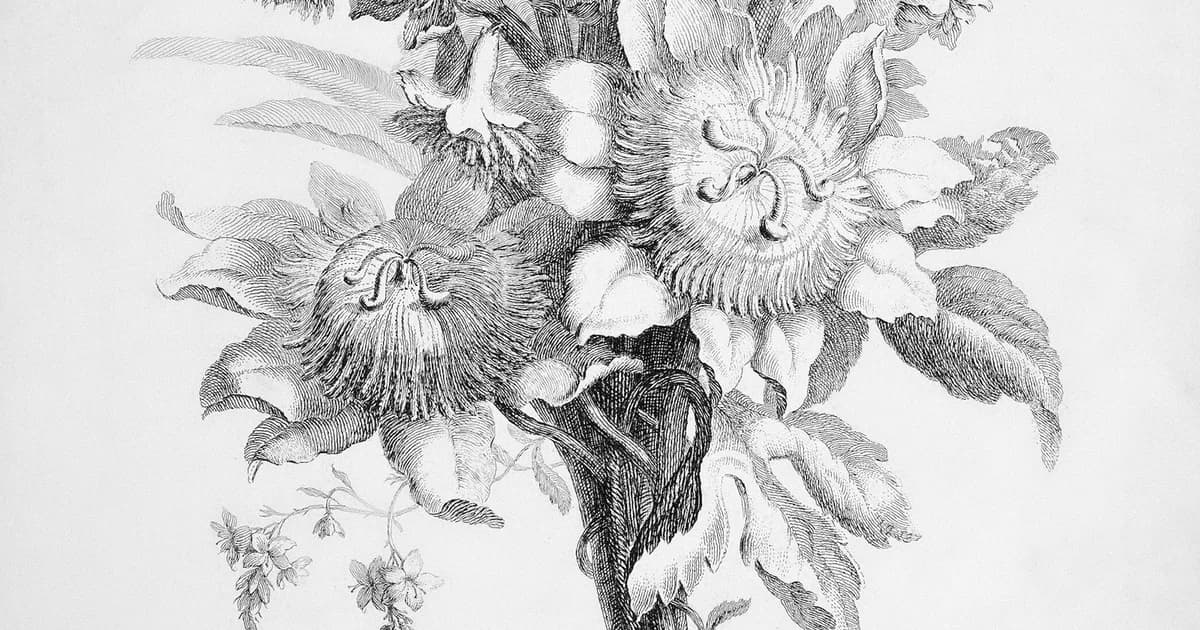
You can draw an easy flower in about five steps, starting with a small circle for the center and adding petals around it. This guide walks you through a daisy, a tulip, a simple rose, a sunflower, and a five-petal bloom, all from shapes you already know. If you can draw a circle and a curved line, you can draw these.
Want to color flowers instead of sketching them? Grab the free nature and flower coloring pages.
What you'll need
You really only need three things to start, and you almost certainly have them already.
- A pencil. A 2B is lovely for this because it is soft and dark enough to see, yet still erases cleanly. No 2B on hand? Any everyday HB school pencil works fine. It will just sit a touch lighter on the page.
- An eraser. A soft white eraser lifts your early guide lines without tearing the paper.
- Paper. Plain 20 lb / 75 GSM printer paper is perfect for practice. If you plan to add markers later, reach for something heavier like 65 lb / 176 GSM cardstock so the ink doesn't bleed through.
Optional, for when you want to outline and color: a 0.3 mm fineliner for clean dark outlines, plus colored pencils or markers. Start light with the pencil, then commit to your favorite lines once the shape looks right.
1. Draw a daisy (the friendliest first flower)
A daisy is the gentlest place to begin because it is built from one circle and a ring of simple petals. Nothing has to be perfect, which is exactly why it works.
- Draw a small circle in the middle of your page for the center.
- Lightly sketch a larger circle around it as a guide. Your petals will reach out to this outer ring.
- Add rounded petals around the center, each shaped like a long, soft oval. Aim for 10 to 12 petals, evenly spaced, with their tips touching that guide circle.
- Gently erase the outer guide circle so only the petals and center remain.
- Add a curved stem and one or two pointed leaves at the base.
When you space the first four petals at the top, bottom, left, and right, the rest fall into place between them. That little trick keeps the daisy from crowding on one side.
Color idea. Leave the petals white or tint them the softest yellow, and fill the center with warm gold or brown dots. Daisies look cheerful with the simplest palette.
2. Draw a tulip (three petals and a stem)
A tulip is one clean cup shape with three petal tips, so it comes together fast and still reads instantly as a tulip.
- Draw a wide, shallow U shape, like a rounded cup, for the base of the bloom.
- On top of the cup, add a center petal that curves up to a soft point.
- Add one petal on each side of the center, leaning slightly outward so they peek out behind it.
- Draw a straight stem down from the bottom of the cup.
- Add two long, pointed leaves that sweep up alongside the stem.
The whole flower sits on top of the cup, so draw the cup first and let everything build from there. If you draw the petals before the base, they tend to float with nowhere to land.
Common mistake. Tulip petals are gently rounded, not sharp triangles. Keep the tops curved and the flower stays soft and natural.
3. Draw a simple rose (start from a spiral)
Roses scare a lot of beginners, but a simple rose is really just a spiral wrapped in a few loose curves. Start in the center and work your way out.
- In the middle of your page, draw a small loose spiral, like a swirl of soft-serve seen from above.
- Wrap a gentle C shape around one side of the spiral. This is your first petal.
- Add a few more curved petals around the spiral, each a little bigger than the last, overlapping like cupped hands.
- Draw a soft, slightly uneven outline around the outside to round off the whole bloom into a teardrop or heart shape.
- Add a stem, two leaves, and, if you like, a couple of small thorns.
Those overlapping curves around the spiral are what make it read as a rose instead of a circle, so keep them loose and let them cross. Real petals overlap, so a little untidiness here helps.
Color idea. Layer your colored pencil light to dark, starting pale pink and deepening toward the center where the petals bunch. When you have a few layers down, pressing hard on a final pass to push the colors smooth is called burnishing.
4. Draw a sunflower (a circle and two rows of petals)
A sunflower is a daisy with a bigger, textured center and two layers of petals. It looks impressive and stays beginner-friendly.
- Draw a medium circle for the seed center.
- Fill that center with a grid of tiny crosshatched lines or a scatter of little dots to suggest the seeds.
- Around the center, draw a ring of petals with slightly pointed tips, like rounded teardrops.
- Add a second ring of petals behind the first, nudged to fill the gaps between the front petals.
- Draw a thick stem and two broad, jagged-edged leaves.
Offsetting the back row so it peeks through the gaps is what gives a sunflower its full, layered look. If both rows line up exactly, the petals flatten out.
Color idea. Bright yellow petals, a brown or deep-gold center, and a green stem. Sunflowers are forgiving and the colors do a lot of the work.
5. Draw a five-petal flower (the quick everyday bloom)
This is the flower you'll doodle in the margin of a notebook for the rest of your life. It is the fastest one here.
- Make a small dot or tiny circle for the center.
- Draw five rounded petals around it, like the petals of a buttercup, evenly spaced around the dot.
- Add a small curved line inside each petal near the center for a little depth.
- Draw a thin stem and a single leaf.
Spacing matters more than neatness here. Place one petal straight up first, then space the other four evenly around the circle, and the flower stays balanced.
Get creative with flower doodle ideas
Once the five basics feel comfortable, start playing. Doodling has no rules, and this is where your own style shows up.
- Swap petal shapes: try hearts, narrow ovals, wavy edges, or pointed tips.
- Fill petals with patterns like dots, stripes, or tiny checkers.
- Layer a smaller flower inside a larger one for a double bloom.
- Connect several flowers with looping stems to make a little garland.
- Mix flowers with stars, leaves, or simple swirls to fill a page.
- Combine two flowers you know, like a rose center with daisy petals, to invent a bloom that doesn't exist.
A reference photo is a guide, not a rule. Borrow the parts you like and leave the rest. The flowers that feel most like yours are usually the ones you tweaked.
Common mistakes to avoid
A few small habits make flower drawing much easier once you know them.
- Pressing too hard at the start. Keep your first lines light so you can erase and adjust. Commit to dark lines only once the shape looks right.
- Making every petal identical. Real flowers are a little uneven, and that variation is what makes a drawing feel alive. Slightly different petals read as more natural, not less.
- Drawing petals before the center. The center anchors the whole flower. Start there, then build outward so the petals have something to circle.
- Skipping the stem and leaves. A bloom with a simple stem and a leaf or two instantly looks finished instead of floating.
Take a break and come back with fresh eyes if a drawing feels stuck. A flower you set aside often looks better than you remembered.
Frequently asked questions
What is the easiest flower to draw for beginners?
The daisy is widely considered the easiest, because it is built from one center circle and a ring of simple oval petals with no need for symmetry. A five-petal flower and a tulip are close behind. All three start from basic shapes, so they are forgiving when your lines wobble.
Do I need expensive supplies to draw flowers?
No. A single pencil and a sheet of paper are enough to draw every flower in this guide. A 2B pencil is a nice upgrade because it is soft and dark, but an everyday HB works too. Add a fineliner, colored pencils, or markers later only if you want to outline and color.
How long does it take to draw a flower?
A simple daisy or five-petal flower takes about 5 minutes once you have practiced it a few times. A layered sunflower or a rose takes a little longer because of the extra petals. The more you draw the same flower, the faster and steadier your lines become.
What if my flower doesn't look perfect?
A slightly uneven flower usually looks more natural than a perfectly symmetrical one, since real petals are never identical. Treat small wobbles as your style, not as mistakes. Keep your early lines light so you can nudge anything that bothers you before you commit.
Keep your garden of ideas growing
Every flower here starts the same way: a circle for the center, then petals built around it. Once that one habit sticks, a daisy, a tulip, a rose, a sunflower, and a five-petal bloom are all within reach, and you can remix them into doodles all your own.
Pick one flower and draw it today, keeping your lines light and your expectations loose. Want to color flowers instead of sketching them from scratch? Print the free nature and flower coloring pages and fill them in with whatever colors make you happy.